When Clients Call You Directly: How Personal Trust Becomes a Ceiling on Your Company's Growth

The Phone That Never Stops Ringing
There is a particular kind of founder who has built something genuinely impressive. Their clients love them. Referrals come easily. Renewal conversations are warm and uncomplicated. On the surface, this looks like success—and in many ways, it is.
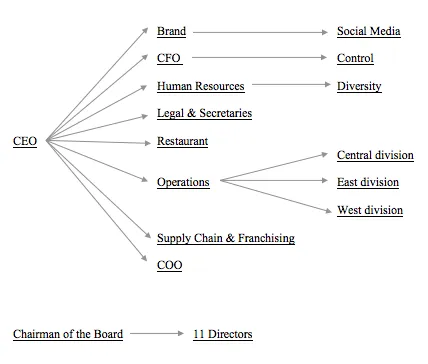
But look more carefully at the org chart, and a different picture emerges. Every major account has the founder's personal cell number. Every contract renewal involves at least one call where the founder reassures the client directly. Every escalation, every negotiation, every moment of friction gets routed back to the same person.
This is what growth strategists sometimes call the visibility tax—an invisible cost that founders pay every time the company's credibility is tied to one individual rather than the institution itself. It doesn't show up on a profit and loss statement. It doesn't trigger an alert in your CRM. But it is quietly determining the ceiling of what your company can become.
Why Clients Bond to People, Not Logos
Client loyalty to founders is not irrational. It is, in fact, entirely understandable. In the early stages of most businesses, the founder is the product—or at least the most reliable signal of its quality. They set the tone, absorb the risk, and personally guarantee outcomes through sheer attention and accountability.
Clients who experienced that founding-era intensity do not forget it. They trusted a person before they trusted a company, and that sequence matters psychologically. Research in organizational behavior consistently shows that interpersonal trust is stickier and more durable than institutional trust, particularly in professional services, consulting, and relationship-driven industries.
The problem is not that clients trust founders. The problem is that the company never built a parallel pathway for that trust to travel.
The Revenue Ceiling You Cannot See from the Inside
Most founders who operate this way do not realize the constraint until they try to scale. They bring on a capable account manager or a talented VP of Client Success, only to find that clients still route around them. They hire, they delegate, they document—and then a top client calls to say they want to check in with the founder before renewing.
At that moment, the organizational trust deficit becomes visible. And it carries real financial consequences.
Consider what this dynamic actually costs:
- Capacity limits. A founder who is personally essential to ten accounts cannot be personally essential to forty. Growth in the client base requires growth in the founder's availability, which is finite.
- Valuation drag. Buyers and investors conducting due diligence on a scaling company apply what is sometimes called key-person risk to their valuation models. If the business cannot retain clients without the founder present, that risk is priced into any acquisition or funding conversation.
- Talent attrition. High-caliber account managers and client success professionals will not stay in roles where they are structurally prevented from building meaningful client relationships. The message the org sends—unintentionally—is that they are administrators, not relationship owners.
- Deal loss during transitions. When a founder steps back, even temporarily, clients who have no relationship with anyone else on the team become vulnerable to competitive approaches. The gap is not about service quality. It is about relational continuity.
The Paradox of Earned Credibility
There is a painful irony embedded in this situation. The founder who built the business through exceptional client relationships has, in doing so, created the very dynamic that now limits the business's potential. Their success became their constraint.
This is not a failure of character or even of strategy in the early stages. Founder-led selling and founder-led client management are often the right approach when a company is finding its footing. The mistake is allowing those patterns to persist well past the point where they serve the organization.
The transition from founder-as-relationship-anchor to organization-as-relationship-anchor is one of the most strategically important moves a scaling company can make. It is also one of the least discussed, because it requires founders to voluntarily reduce their own centrality—which runs counter to most entrepreneurial instincts.
A Framework for Transferring Trust Without Losing Accounts
The good news is that this transition, while delicate, is entirely manageable when approached with intentionality. The following framework has helped scaling companies navigate it without triggering client attrition.
1. Map the relationship landscape before you move anything. Begin with a clear-eyed audit of every significant client relationship. Identify which accounts have meaningful contact with someone other than the founder, and which are essentially founder-only relationships. This map is your risk register. Accounts in the second category require the most careful attention.
2. Introduce, don't replace. The most common mistake in trust transfer is abrupt handoffs. A client who has spoken exclusively with the founder for three years will not immediately embrace a new account lead who arrives in their inbox announcing that they are now the primary contact. Instead, engineer a period of co-presence. The founder introduces the new relationship owner, explicitly endorses their capabilities, and participates visibly in early interactions before gradually stepping back.
3. Create organizational proof points. Clients bond to people partly because people have track records they can evaluate. Build a similar track record for the organization. Case studies, outcome reports, and client success stories that feature the team—not just the founder—help reframe where the credibility actually lives.
4. Give your team the context, not just the contact. One of the reasons handoffs fail is that the incoming relationship owner lacks the institutional memory that the founder carries. Before any transition, invest in thorough briefings: the client's history, their unstated priorities, the moments of tension that were resolved and how, the communication style that works. Context is what allows a new relationship owner to feel like a continuation rather than a replacement.
5. Let clients see the organization succeed without you. The most powerful trust transfer happens when a client witnesses your team solving a problem, navigating a challenge, or delivering a result without the founder's direct involvement. Deliberately create these moments. Let the team take the lead on a mid-cycle review. Allow them to handle a minor service issue independently. Each successful interaction builds the organizational credibility that makes the founder's centrality less necessary.
What This Looks Like at Scale
Companies that navigate this transition successfully do not eliminate the founder's relationship with clients—they redefine it. The founder moves from being the primary contact to being the executive sponsor: someone clients know they can access for strategic conversations, but who is not required for operational continuity.
This repositioning actually enhances perceived value. Clients who previously experienced the founder as a day-to-day resource often develop a higher regard for them when they become a more elevated, less frequently accessed point of contact. Scarcity, deployed thoughtfully, strengthens rather than weakens the relationship.
More importantly, it frees the founder to do what only founders can do: identify new markets, build strategic partnerships, and set the direction that the organization—now capable of operating without constant founder-level involvement—is equipped to execute.
Growth Requires a Distributed Foundation
Every company that has scaled past the founder-dependency stage did so by making a deliberate choice: to build trust as an organizational asset rather than a personal one. That choice is not comfortable. It requires stepping back from relationships that feel like competitive advantages. It requires investing in people and systems before the pressure to do so becomes acute.
But the alternative—remaining the single point of contact that every key account depends on—is not a sustainable growth strategy. It is a ceiling with a founder's name on it.
The question worth asking is not whether your clients trust you. Of course they do. The question is whether they trust your company enough to stay when you are no longer the one answering the phone.